
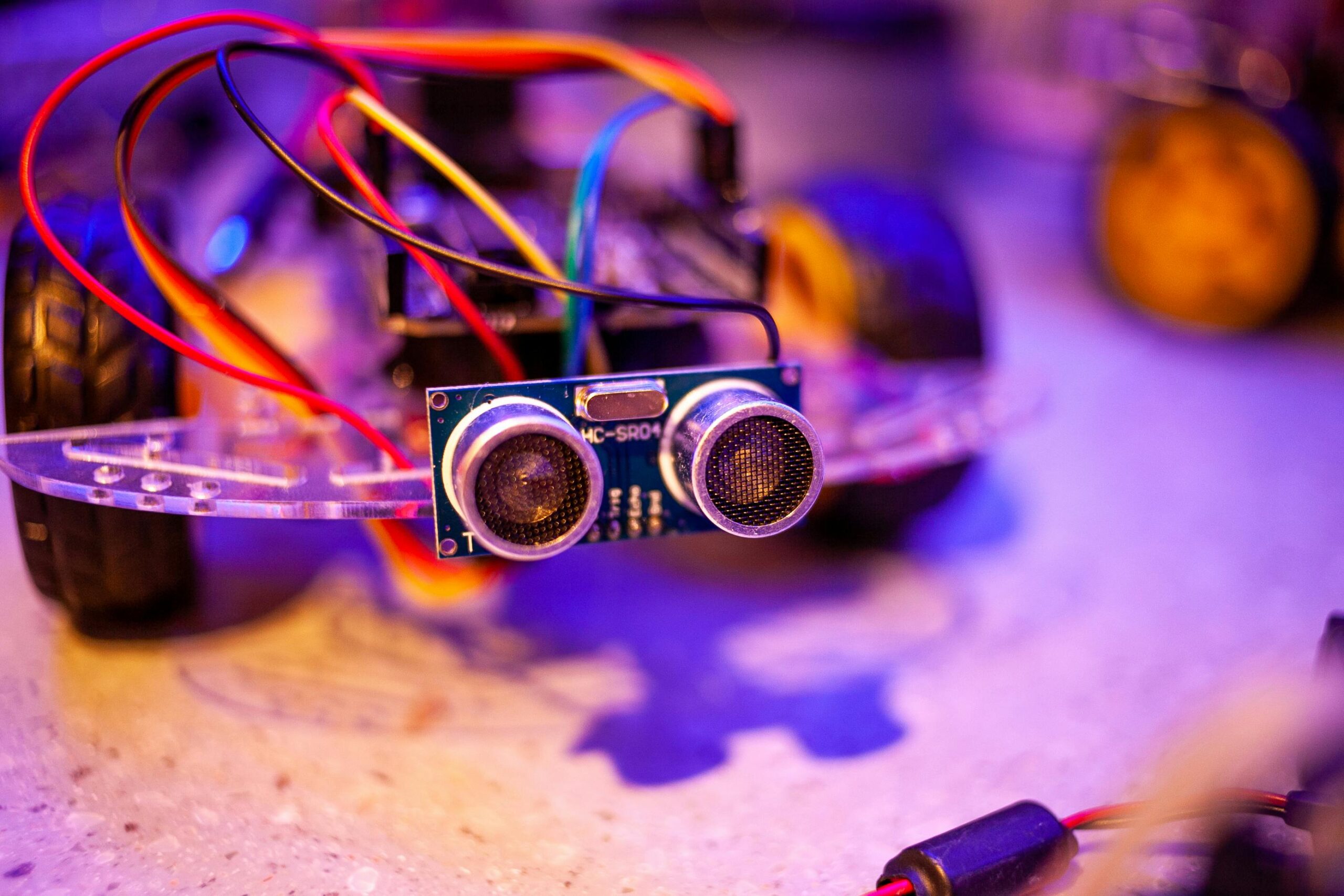

AI Supercomputers & Specialized Chips: Powering the Next Innovation Wave
1:Introduction: Why Hardware Defines the AI Era
Artificial Intelligence has entered a defining phase where progress is no longer constrained by algorithms alone. While breakthroughs in deep learning, generative AI, and reinforcement learning continue, the true bottleneck—and opportunity—lies in computing power. As AI models scale into hundreds of billions and even trillions of parameters, conventional hardware architectures are pushed to their limits.
In response, AI supercomputers and specialized chips have emerged as the foundation of the next innovation wave. These systems enable organizations to train massive models, deploy real-time inference at scale, and unlock new capabilities across science, industry, and consumer applications. By 2026, AI hardware is no longer a background enabler—it is a strategic differentiator.
This article explores how AI supercomputers and specialized chips are reshaping large-scale AI deployment, the architectures driving this transformation, key use cases, challenges, and what the future holds for AI-driven economies.
2:Understanding AI Supercomputers
a:What Is an AI Supercomputer?
An AI supercomputer is a high-performance computing (HPC) system purpose-built for artificial intelligence workloads. Unlike traditional supercomputers optimized for numerical simulations, AI supercomputers focus on parallel data processing, accelerated matrix operations, and rapid model training.
Core objectives of AI supercomputers include:
Training large language and multimodal models
Running inference at massive scale
Supporting data-intensive AI research
Enabling enterprise-grade AI applications
These systems are designed to handle workloads that would be impractical or impossible on conventional infrastructure.
b:Key Components of AI Supercomputers
AI supercomputers integrate several advanced components:
Accelerators: GPUs, TPUs, or custom AI ASICs
High-Bandwidth Memory (HBM): To reduce data access latency
High-Speed Interconnects: NVLink, InfiniBand, or proprietary fabrics
Distributed Storage: Supporting petabyte-scale datasets
Advanced Cooling Systems: Liquid and immersion cooling
Together, these components enable unprecedented computational throughput and scalability.
3:The Evolution of Specialized AI Chips
a:Why CPUs Alone Are Insufficient
Central Processing Units (CPUs) are designed for general-purpose computing, prioritizing flexibility over parallelism. Modern AI workloads, however, require executing millions of operations simultaneously.
Key CPU limitations include:
Limited parallel execution units
High energy consumption per AI operation
Memory bandwidth bottlenecks
These constraints drove the development of specialized AI accelerators.
b:Major Categories of AI Chips
Graphics Processing Units (GPUs)
GPUs remain the dominant platform for AI training. Their strengths include:
Massive parallel processing cores
Optimized tensor and matrix operations
Strong software ecosystem support
GPUs are widely used in hyperscale data centers and enterprise AI platforms.
c:Tensor Processing Units (TPUs)
TPUs are application-specific integrated circuits designed exclusively for machine learning workloads. They offer:
High efficiency for deep learning tasks
Tight integration with AI frameworks
Lower power consumption per computation
TPUs excel in large-scale training and inference environments.
d:AI Accelerators and NPUs
Custom accelerators and Neural Processing Units (NPUs) are optimized for specific AI tasks, particularly inference. They are commonly deployed in:
Smartphones and consumer electronics
Autonomous vehicles
Industrial and edge AI systems
These chips enable real-time AI processing with minimal latency.
4:Emerging Hardware Architectures Powering Large-Scale AI
a:Chiplet-Based Design
Traditional monolithic chips face manufacturing and scalability challenges. Chiplet-based architectures address this by combining smaller dies into a single package.
Benefits include:
Improved manufacturing yields
Greater design flexibility
Faster innovation cycles
Chiplets are now central to next-generation AI processors.
b:Heterogeneous Computing Architectures
Modern AI systems rely on heterogeneous computing, combining:
CPUs for control and orchestration
GPUs or accelerators for computation
Specialized networking and memory controllers
This approach maximizes performance and resource efficiency.
c:Memory-Centric Computing
As AI models grow, memory bandwidth becomes a critical bottleneck. New architectures aim to reduce data movement through:
High-bandwidth memory stacks
Near-memory and in-memory computing
Unified memory architectures
These innovations significantly improve performance and energy efficiency.
5:AI Supercomputers in Real-World Deployment
a:Training Large Language Models
AI supercomputers enable the training of massive models by distributing workloads across thousands of accelerators. This allows:
Faster training cycles
Improved model convergence
Reduced time-to-market for AI solutions
Large-scale training that once took months can now be completed in weeks or days.
b:Scientific Research and Discovery
In scientific domains, AI supercomputers accelerate:
Drug discovery and protein structure prediction
Climate modeling and weather forecasting
Materials science and semiconductor research
AI-driven simulations reduce experimentation costs and unlock new discoveries.
c:Enterprise and Industrial Applications
Enterprises deploy AI supercomputers for:
Predictive maintenance
Supply chain optimization
Financial risk modeling
Fraud detection and cybersecurity
These systems transform raw data into actionable insights at scale.
6:Energy Efficiency and Sustainability
a:The Growing Energy Challenge
AI supercomputers consume significant power, raising concerns about:
Operational costs
Environmental impact
Data center capacity limits
Energy efficiency is now a core design requirement.
b:Innovations in Sustainable AI Hardware
Key sustainability initiatives include:
Energy-efficient chip architectures
Advanced liquid and immersion cooling
AI-driven power management
Integration of renewable energy sources
Sustainable AI infrastructure is becoming a competitive advantage.
7:Global Competition and the AI Chip Race
a:AI Hardware as a Strategic Asset
Governments and corporations view AI hardware as critical infrastructure. Investments focus on:
Domestic semiconductor manufacturing
Secure supply chains
National AI capabilities
b:Supply Chain Resilience
The industry is diversifying production and sourcing to reduce geopolitical and operational risks, reshaping the global semiconductor landscape.
8:Edge AI and Distributed Intelligence
a:The Rise of Edge AI Hardware
Not all AI workloads run in centralized data centers. Edge AI hardware enables:
Real-time decision-making
Reduced latency
Enhanced data privacy
Applications include autonomous systems, smart factories, and healthcare devices.
b:Hybrid Cloud-Edge AI Models
Future AI deployments blend:
Cloud-based training
Edge-based inference
This hybrid approach balances performance, cost, and responsiveness.
9:Software–Hardware Co-Design
a:Why Co-Design Matters
Optimizing AI performance requires aligning software with hardware capabilities. Benefits include:
Improved efficiency
Faster development cycles
Reduced deployment complexity
b:AI Compilers and Frameworks
Modern compilers automatically optimize models for target hardware, enabling developers to focus on innovation rather than low-level tuning.
10:Future Directions Beyond 2026
a:Neuromorphic and Quantum Computing
Emerging paradigms such as neuromorphic chips and quantum accelerators aim to:
Mimic brain-like efficiency
Solve problems beyond classical computing
While still experimental, they represent long-term disruption.
b:From Scale to Efficiency
The next wave of AI hardware will prioritize:
Smarter, more efficient models
Adaptive and context-aware hardware
Sustainable computing at scale
11:Conclusion: Hardware as the Engine of AI Innovation
AI supercomputers and specialized chips form the backbone of modern artificial intelligence. As AI applications expand across industries, hardware innovation determines what is possible, scalable, and sustainable.
By enabling faster training, real-time inference, and energy-efficient deployment, emerging hardware architectures are powering the next innovation wave. Organizations that invest strategically in AI infrastructure today will shape the future of technology, industry, and society.

Leave a Reply