
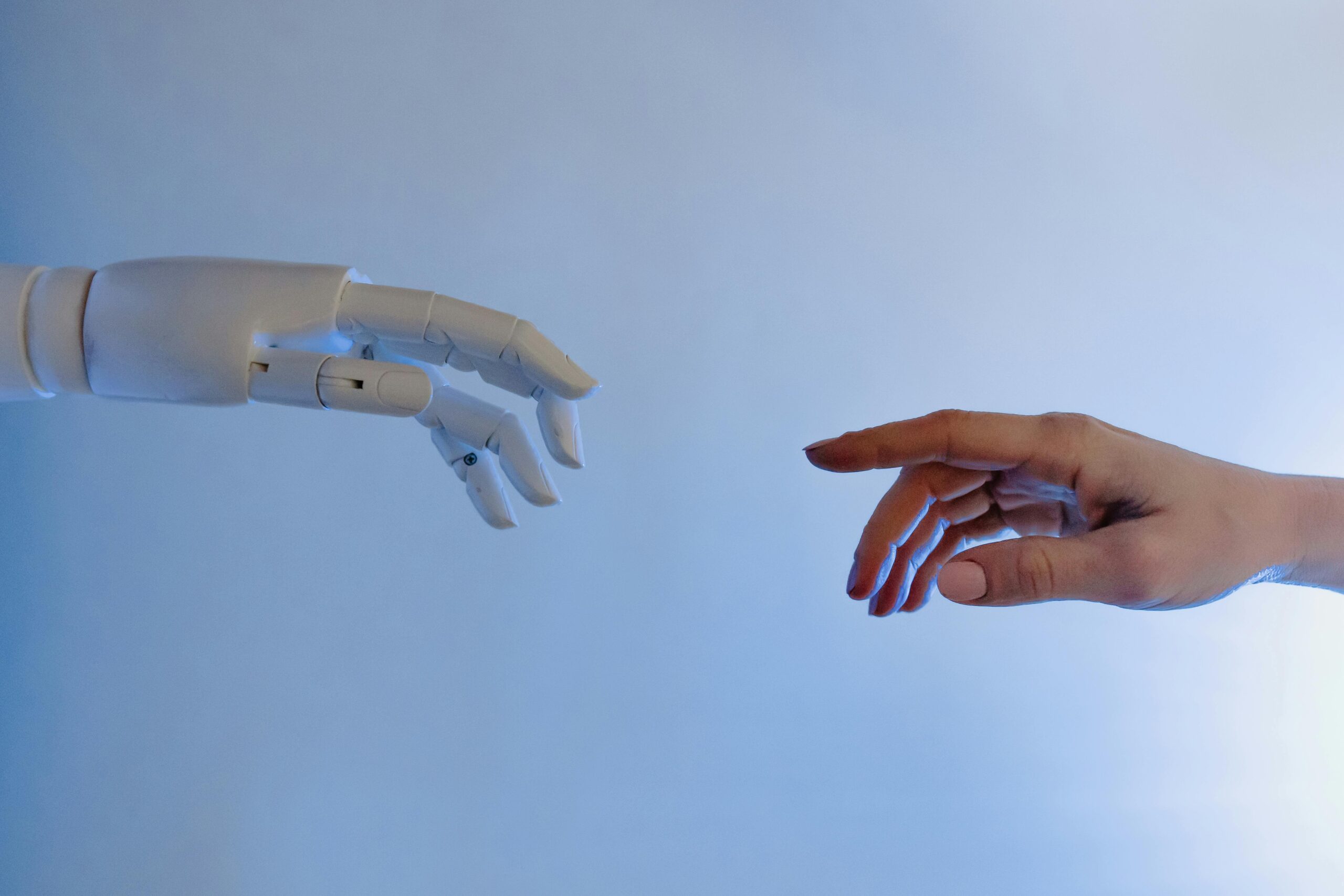

Human-AI Collaboration Tools: Enhancing Creativity and Productivity
Author: Fahad Nazeer
1: Human-AI Collaboration Tools: Enhancing Creativity and Productivity
Artificial intelligence is no longer just a background technology quietly automating tasks—it has become an active collaborator in how humans think, create, and work. From writers brainstorming ideas with AI assistants to engineers designing products alongside generative models, human-AI collaboration tools are reshaping productivity and creativity across industries.
Rather than replacing human intelligence, modern AI systems are increasingly designed to augment human capabilities, enabling people to work faster, think broader, and innovate more effectively. This shift marks a move from automation to augmentation, where humans and machines collaborate as partners.
This article explores how human-AI collaboration tools are enhancing creativity and productivity, examines real-world use cases across industries, discusses benefits and challenges, and outlines what the future holds for collaborative intelligence.
2: Understanding Human-AI Collaboration
a: What Is Human-AI Collaboration?
Human-AI collaboration refers to systems where humans and artificial intelligence work together, each contributing their strengths:
Humans bring creativity, intuition, ethics, and contextual understanding
AI brings speed, pattern recognition, scalability, and data processing power
Instead of operating independently, these systems are designed to interact continuously, learning from each other and improving outcomes over time.
3: From Automation to Augmented Intelligence
Traditional AI focused on automating repetitive tasks. Human-AI collaboration tools go further by:
Supporting decision-making rather than replacing it
Enhancing creative workflows instead of eliminating them
Acting as co-creators, analysts, and advisors
This paradigm is often called augmented intelligence, emphasizing partnership over substitution.
4: Why Human-AI Collaboration Matters Today
a: Rising Complexity of Work
Modern work environments involve:
Massive data volumes
Rapid decision cycles
Multidisciplinary problem-solving
Constant innovation pressure
Humans alone struggle to process and analyze this complexity at scale. AI fills this gap by handling data-heavy tasks, freeing humans to focus on strategy and creativity.
5: The Productivity Imperative
Organizations face increasing pressure to:
Do more with fewer resources
Improve efficiency without burnout
Innovate faster than competitors
Human-AI collaboration tools directly address these needs by amplifying individual and team productivity.
6: Core Technologies Powering Human-AI Collaboration
a: Generative AI
Generative AI models create new content such as:
Text
Images
Code
Music and video
These tools act as creative partners, helping humans explore ideas faster and more broadly.
7: Machine Learning and Predictive Analytics
ML systems analyze patterns in data to:
Offer recommendations
Predict outcomes
Optimize workflows
This supports better decision-making across business functions.
8: Natural Language Processing (NLP)
NLP enables intuitive interaction between humans and AI through:
Conversational interfaces
Voice assistants
Text analysis and summarization
This lowers technical barriers and makes AI accessible to non-experts.
9: Multimodal AI Systems
Multimodal systems process multiple input types—text, images, audio, and data—allowing richer collaboration experiences.
10: Human-AI Collaboration in Creative Work
a: Writing and Content Creation
AI writing tools assist with:
Idea generation
Drafting and editing
SEO optimization
Content personalization
Rather than replacing writers, these tools accelerate the creative process and reduce cognitive friction.
b: Design and Visual Creativity
In design, AI supports:
Concept generation
Rapid prototyping
Style exploration
Visual iteration
Designers maintain creative control while AI expands the range of possibilities.
c: Music, Video, and Digital Art
Creative professionals use AI to:
Generate melodies or visual elements
Enhance post-production workflows
Experiment with new artistic styles
This has led to entirely new creative genres driven by human-AI co-creation.
11: Productivity Enhancement Through Human-AI Tools
a: Knowledge Work and Research
AI tools improve productivity by:
Summarizing long documents
Extracting insights from large datasets
Answering complex queries
Supporting research synthesis
This allows professionals to focus on interpretation and strategy.
b: Software Development and Engineering
Human-AI collaboration in coding includes:
Code generation and completion
Bug detection and debugging
Documentation assistance
Performance optimization suggestions
Developers work faster while maintaining human oversight and design decisions.
c: Project Management and Operations
AI enhances team productivity through:
Task prioritization
Workflow optimization
Resource allocation
Risk forecasting
Project managers gain real-time insights without micromanagement.
12: Enterprise Use Cases of Human-AI Collaboration
a: Marketing and Sales
AI supports marketing teams by:
Personalizing campaigns
Analyzing customer behavior
Predicting conversion likelihood
Optimizing pricing strategies
Human creativity combined with AI analytics leads to more effective engagement.
b: Finance and Business Strategy
In finance, AI assists with:
Forecasting and modeling
Fraud detection
Scenario analysis
Investment insights
Decision-makers remain in control while benefiting from AI-driven intelligence.
c: Healthcare and Medicine
Human-AI collaboration improves healthcare through:
Diagnostic support
Treatment planning
Medical imaging analysis
Clinical documentation automation
Doctors make better decisions faster, while maintaining ethical responsibility.
d: Education and Learning
In education, AI enables:
Personalized learning paths
Intelligent tutoring systems
Automated assessment
Curriculum design support
Teachers focus more on mentorship and less on administrative tasks.
13: Benefits of Human-AI Collaboration Tools
Key Advantages
Increased productivity and efficiency
Enhanced creativity and innovation
Reduced cognitive overload
Faster decision-making
Better use of human talent
Scalable expertise across teams
Rather than replacing jobs, these tools reshape roles to be more meaningful and strategic.
14: Challenges and Limitations
a: Over-Reliance on AI
Excessive dependence may lead to:
Reduced critical thinking
Skill degradation
Blind trust in AI outputs
Human judgment must always remain central.
b: Bias and Ethical Concerns
AI systems can reflect:
Data bias
Cultural bias
Unequal representation
Responsible design and governance are essential.
c: Transparency and Explainability
Many AI systems operate as “black boxes,” making it difficult to:
Understand decisions
Build trust
Ensure accountability
Explainable AI is crucial for long-term adoption.
d: Workforce Adaptation
Successful collaboration requires:
New skills
Training and upskilling
Cultural acceptance of AI as a partner
15: Best Practices for Implementing Human-AI Collaboration Tools
a: Design for Collaboration, Not Replacement
Keep humans in the decision loop
Focus on augmentation, not automation
b: Invest in AI Literacy
Train teams to understand AI capabilities and limits
Encourage experimentation
c: Start with High-Impact Use Cases
Identify repetitive or data-heavy tasks
Pilot tools before scaling
d: Establish Ethical and Governance Frameworks
Monitor AI behavior
Address bias and fairness
Ensure compliance with regulations
16: The Future of Human-AI Collaboration
Emerging Trends
AI copilots for every profession
Adaptive systems that learn individual preferences
Emotion-aware AI interfaces
Collaborative intelligence platforms
Deeper integration with AR, VR, and spatial computing
Human-AI collaboration will become a default mode of working, not a novelty.
17: Human Creativity in an AI-Enhanced World
Contrary to fears, AI does not diminish human creativity—it expands it. By handling routine tasks and offering new perspectives, AI allows humans to:
Explore ideas more freely
Take creative risks
Focus on meaning, originality, and impact
The most successful individuals and organizations will be those who learn how to collaborate with AI effectively.
18: Conclusion: Collaboration Is the Future of Intelligence
Human-AI collaboration tools represent a profound shift in how work is done. By blending human insight with machine intelligence, these systems unlock new levels of creativity, productivity, and innovation.
The future is not human versus AI—it is human with AI. Organizations and individuals who embrace this partnership will define the next era of progress, creativity, and economic growth.
Human-AI collaboration is not just a technological evolution—it is a new way of thinking, creating, and working together

Leave a Reply